
Every score has a reason
Each score comes with a plain explanation of the exact behaviours behind it — operators, decision-makers and regulators can all follow it.
YAS platform
YAS turns how a machine behaves into one clear, real-time risk score — so machines run safer and risk is priced better, with the licensed insurer keeping authority over pricing.
The agentic fleet
Each step has its own agent: one captures every signal and puts it in context, one scores it, and one coaches safer behaviour and retunes the model. Signals go in; a standardized AURA score comes out — sharper with every trip.
Telemetry sources
Powered by Events API & SDK + ODD Engine
Captures every machine signal, then tags each one with the conditions it happened in.
Powered by Scoring Model
~100 factors into one score — and shows what moved it.
AURA score
Normalized signal
Powered by coaching & real claims
Coaches risky behaviour down and retunes the model against real claims — so the next score is sharper.
One score, many stakeholders
Faster operational action
Risk behaviours surfaced and coached down — safer operation, lower loss.
For OperatorsBetter-priced risk
An explainable, factor-level risk view that informs pricing.
For Underwriters & capitalLive portfolio risk
Portfolio- and trip-level risk, monitored in near real time with alerts.
For Risk teamsEvents API & SDK
A small device in the vehicle records how it's moving — motion and GPS, many times a second — and cleans up the data on the spot. In the cloud, each trip is matched to the live weather and the exact road it was driven on.

In-vehicle IMU: forward, lateral and vertical acceleration, pitch / roll / yaw, rotation rates, G-force and heading.
GPS location, speed, course and altitude, with per-trip distance, duration and timezone.
Live rainfall, temperature, UV index, humidity and active weather warnings.
Map-matched road class, surface, environment, speed limit, urban density, curvature and elevation.
Machine telemetry
YAS captures four raw sources close to the source — motion, position, weather and road — and turns them into one behaviour-aware record.
Motion
Position
Weather
Road
Motion
Braking and throttle along the direction of travel.
Motion
Cornering force, side to side.
Motion
Road shock and surface roughness.
Motion
Pitch, roll, yaw, rotation rate and compass heading.
Position
Latitude, longitude and altitude, sampled continuously.
Position
Ground speed from GPS, per sample.
Position
Direction of travel over ground.
Position
Distance, duration, start / end and trip centre and radius.
Weather
Live district-level rainfall.
Weather
Ambient temperature by location.
Weather
UV level and exposure band.
Weather
Relative humidity, plus active weather warnings.
Road
Motorway, primary, secondary, residential and more.
Road
Paved, asphalt and surface quality.
Road
Posted maximum speed for the segment.
Road
Tunnel, bridge and urban density.
Event SDK
The in-vehicle SDK captures motion and GPS at the edge, pre-processes and batches locally, then syncs securely — context, scoring and attestation happen downstream.
// Configure the in-vehicle edge SDK
let yas = Yas.configure(
  trackerId: "TRK-3194",
  vehicleId: "EV-0427"
)

// Start a trip — motion + GPS captured at the edge
let trip = yas.startTrip(type: .passenger)

// Samples stream as the machine moves
trip.onSample { s in
  // s.xyAcceleration · s.zAcceleration · s.location
}

// End → batched, synced, scored downstream
let record = await yas.endTrip(trip)
print(record.auraScore)   // 0–100
Data Context Annotation
Raw telemetry is meaningless without context. A hard brake is unremarkable on a dry highway and alarming on a wet downgrade in a school zone.
The ODD Engine tags every event with the exact conditions it happened in — road, speed, weather, density — so risk is read in context, not in the abstract. That history is also a moat: a newcomer can't go back and label road conditions it never recorded, and ours grows with every trip.
Operational Design Domain
Risk factors we track
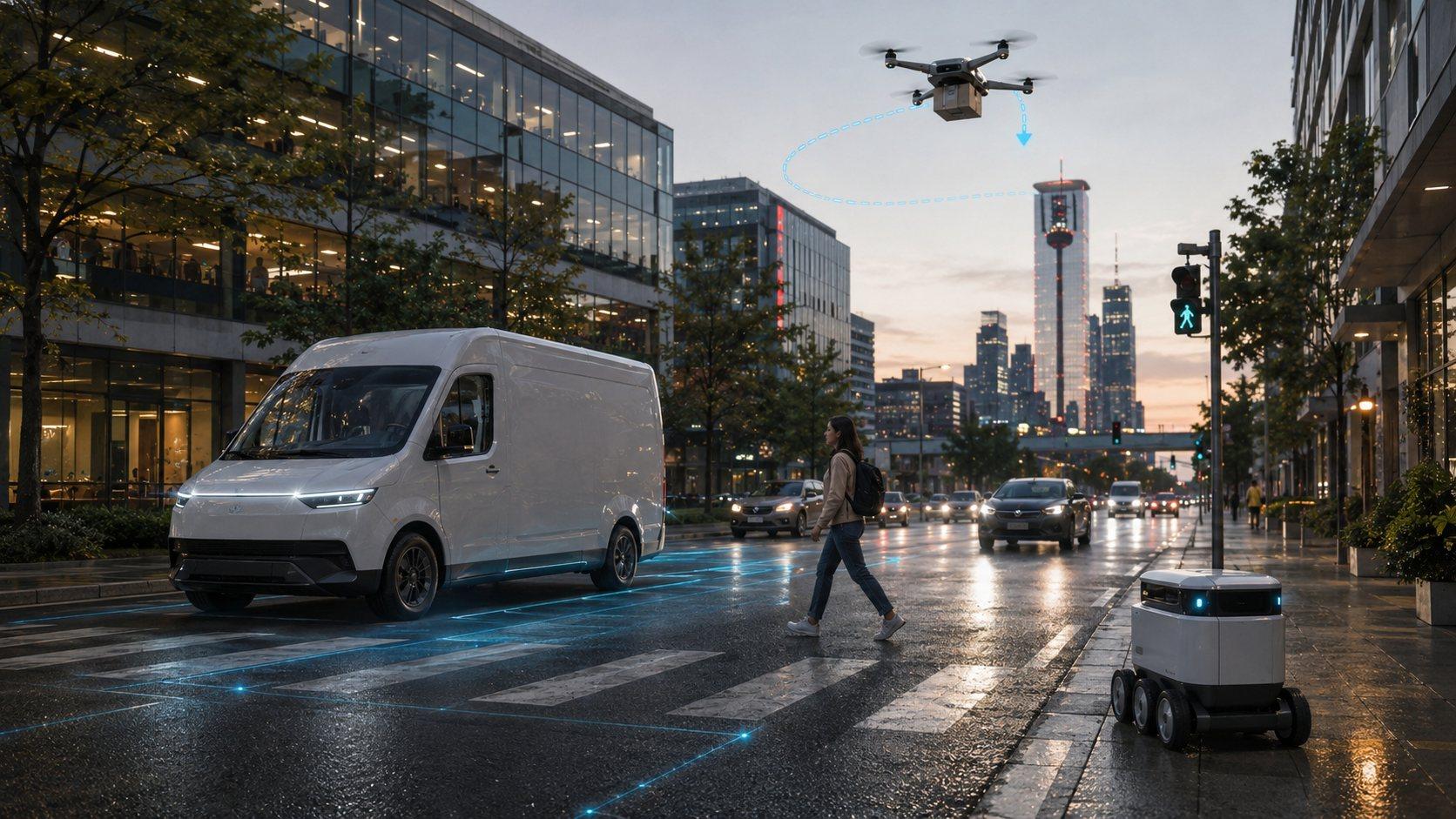
“A whole category of machines — autonomous fleets, robots, humanoids — was running without a real measure of its risk. YAS changes that: operators can finally see how safely each machine runs, cut losses, and earn the trust to scale.”
Scoring Model
YAS breaks each trip into about a hundred risk factors and rolls them into one score — on the same scale for any vehicle, fleet, or machine, anywhere.
And it explains itself. When a score moves, YAS shows which behaviours moved it — not just that it changed. That "why" is what an underwriter can actually act on.
How the score is built
AURA score
Behaviour tracked
Decompose
Score each metric
Normalize score
Behaviour reward
Calibrate
Use cases
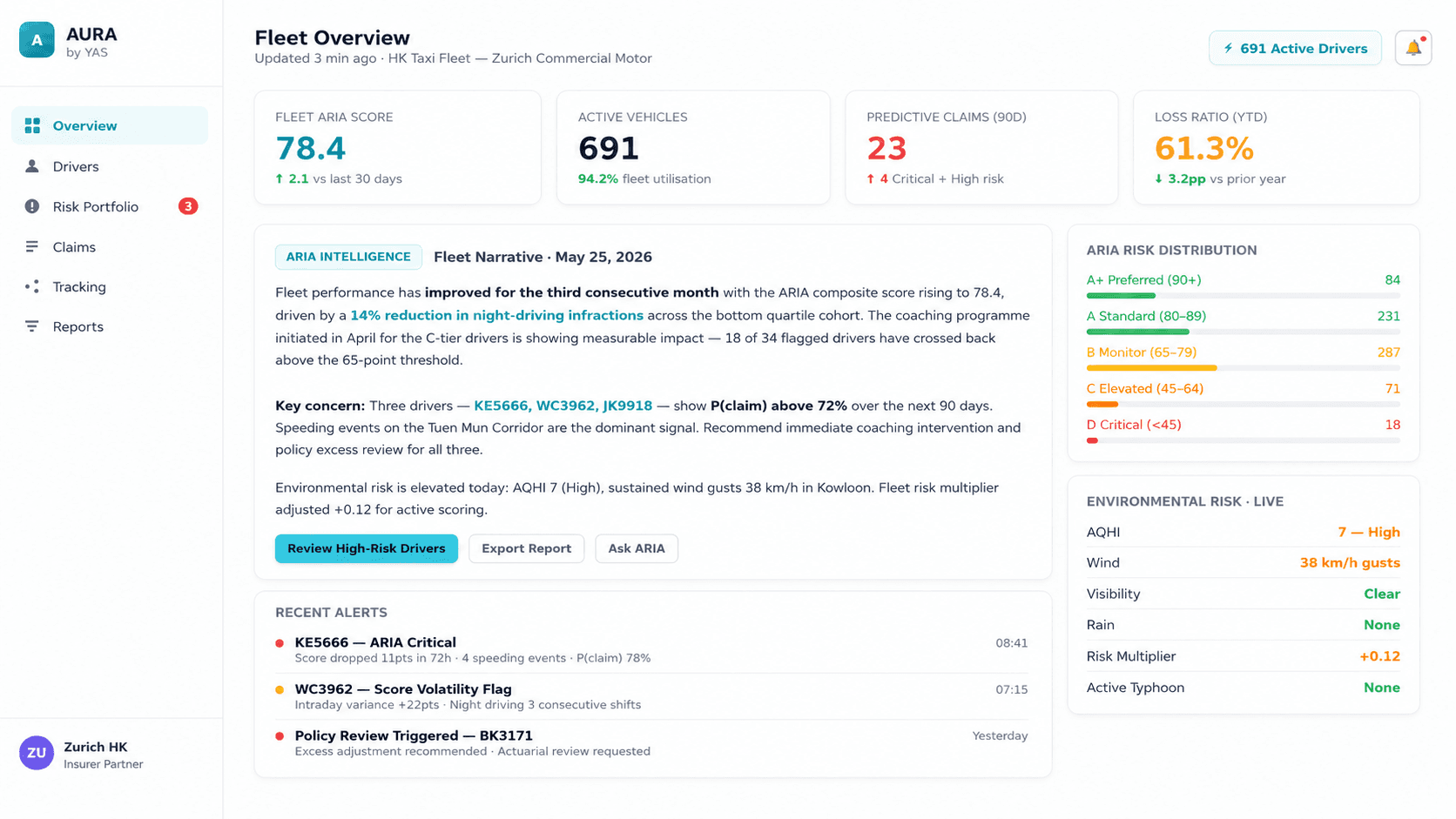
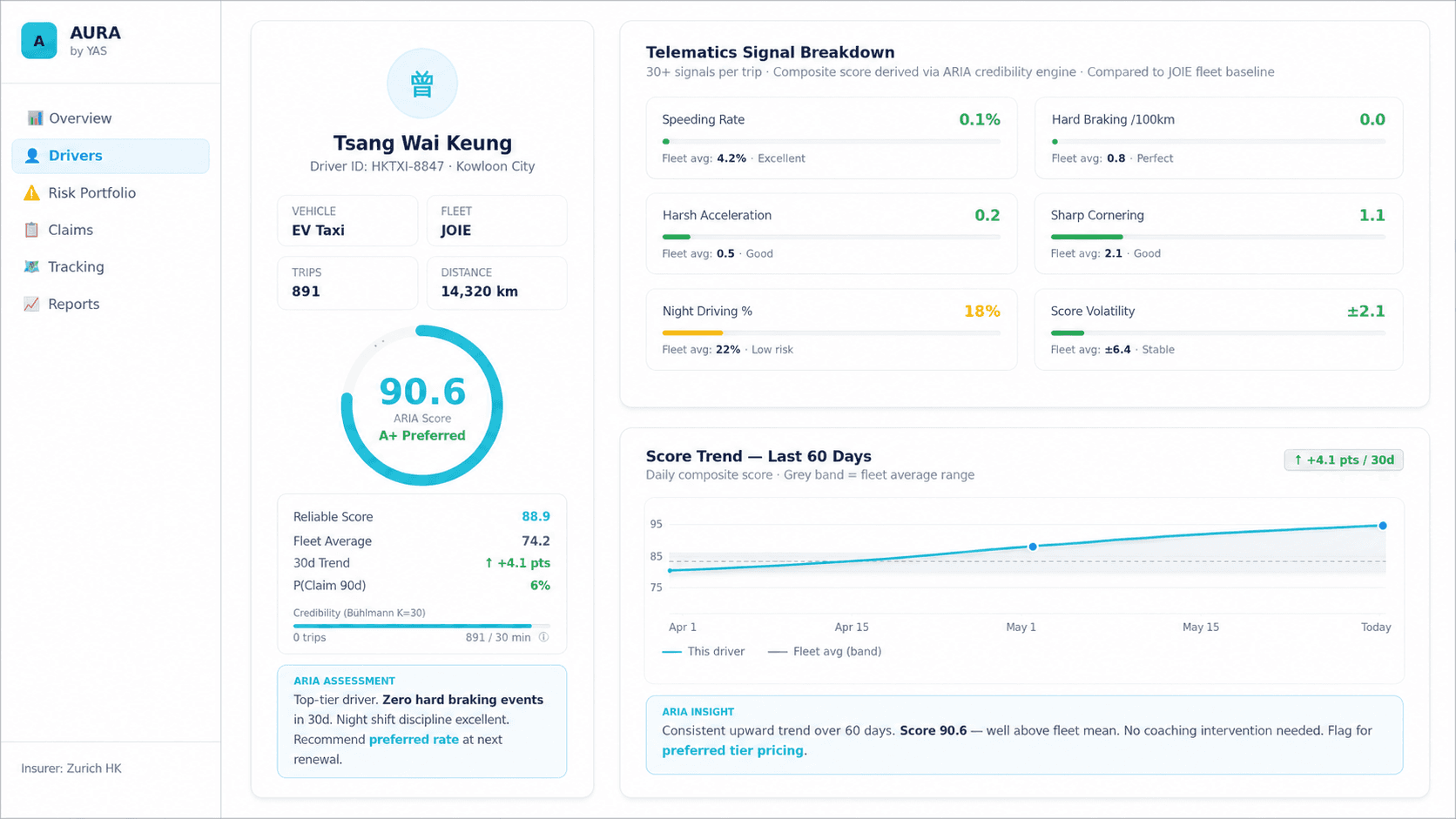
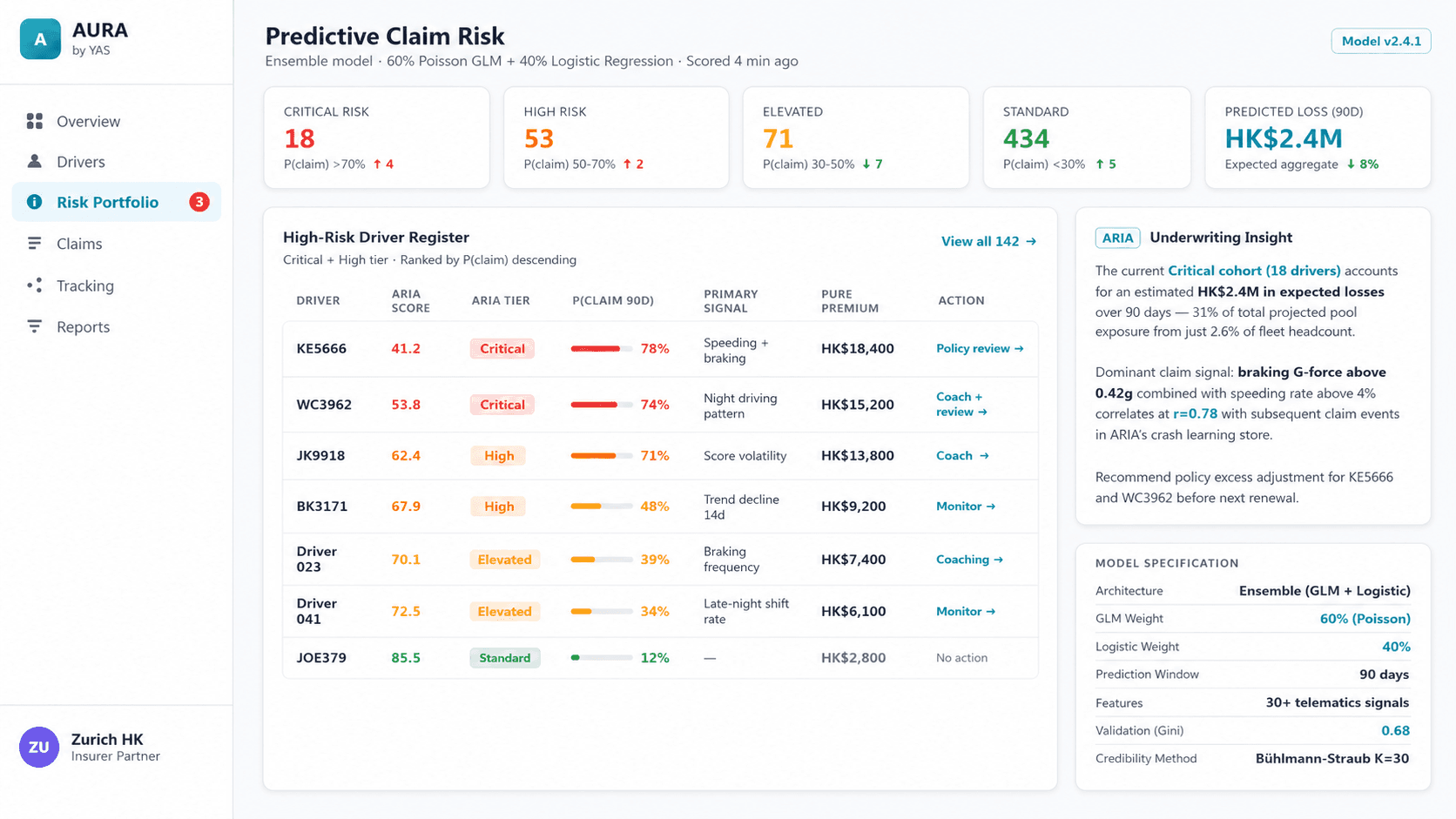
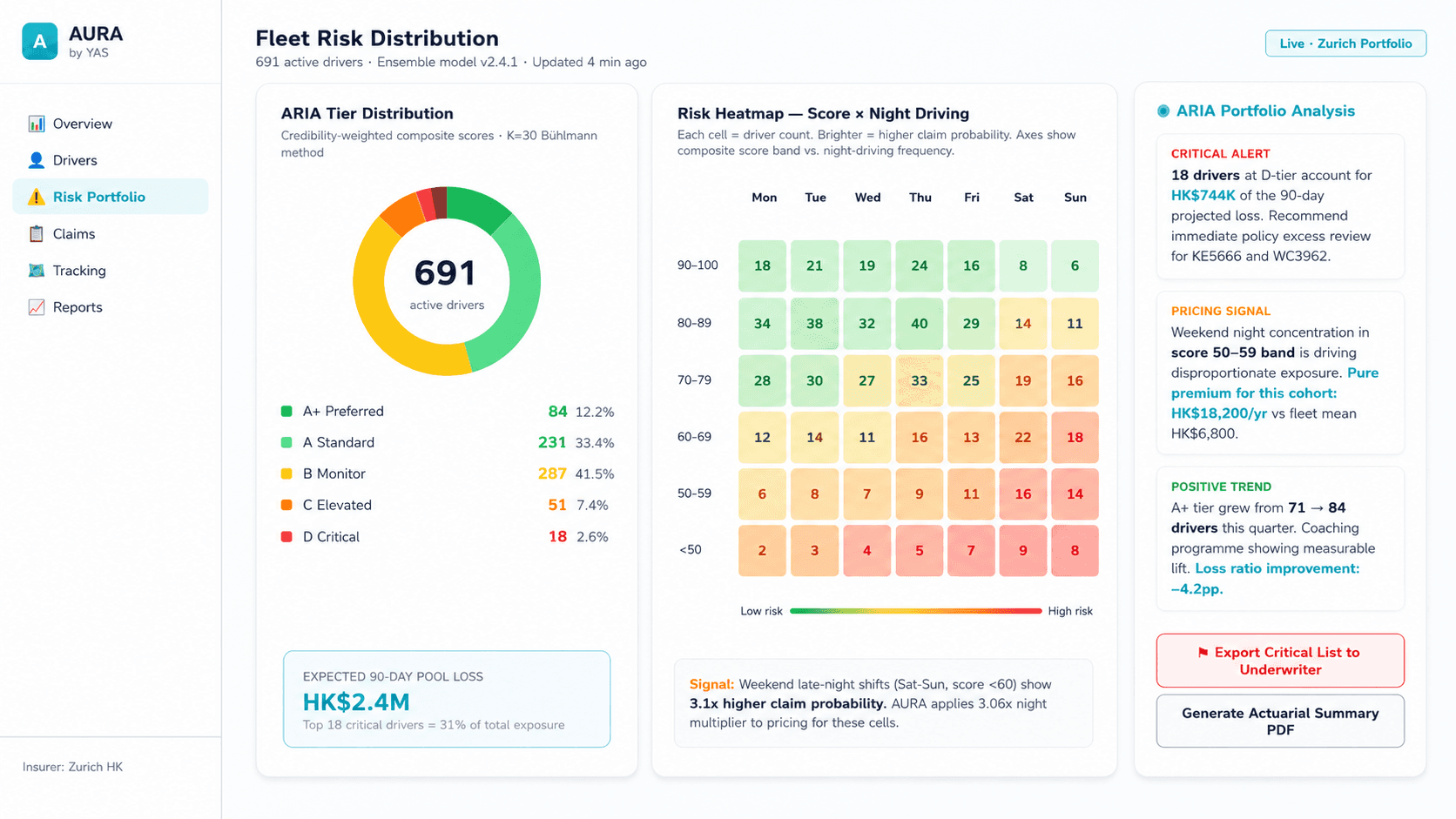
Five product views show how YAS turns raw machine telemetry into risk intelligence — tracking machines, surfacing risk, and keeping fleet operators and insurer partners on the same signal.
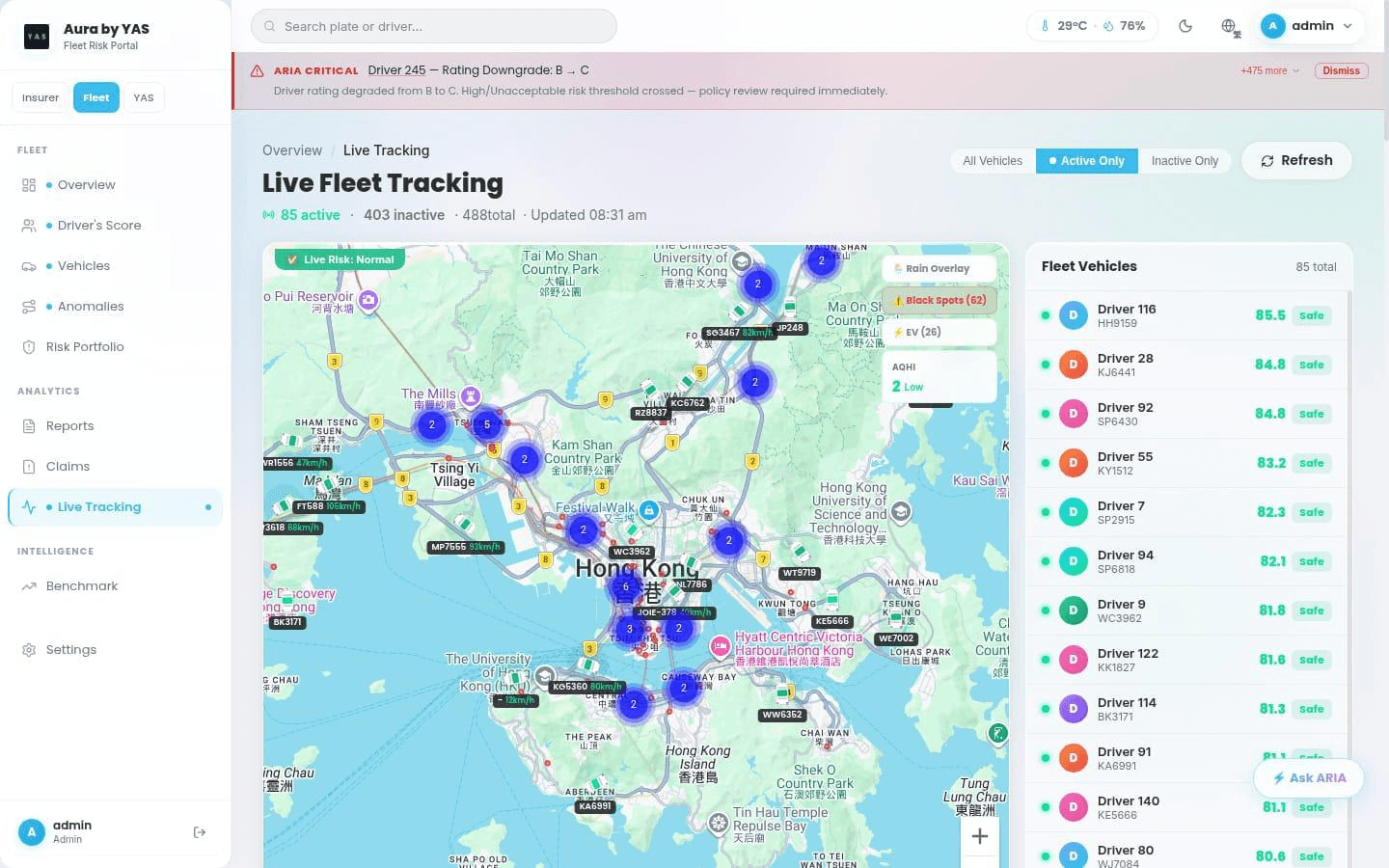
Feature 01
Delivery robots, EV taxis, AVs — with live speed, AURA score, and incident flags. Robot-07 stopped mid-route: velocity anomaly flagged, policy review triggered.
Cryptographic provenance
A score only counts if someone outside the operator will trust it. YAS turns every record into proof, with three guarantees.
A tamper-evident chain from capture to attestation. The record cannot be retroactively altered.
The operator cannot edit its own record. The firewall is architectural, not contractual.
A regulated licence and carrier co-sign give the attestation a basis regulators already recognise.
An operator attesting to its own safety is marking its own homework. Neutrality is the point — and it is built into the architecture, not promised in a contract.
Governance
Regulators expect AI to be open, accountable and easy to explain. YAS was built that way from day one — not patched on later to pass an audit.
Built to meet what regulators expect of AI.
Every input, score and explanation is time-stamped and kept.
Each score comes with a clear explanation anyone can read.
A qualified person always makes the final call.
Scores are checked so no group is treated unfairly.
Each score comes with a plain explanation of the exact behaviours behind it — operators, decision-makers and regulators can all follow it.
YAS gives the risk picture; it never makes the decision. A qualified person reviews and signs off every call.
Before any model update goes live, it's tested against real operating data and must clear strict safety checks.
Every input, score and recommendation is logged and time-stamped, so any decision can be traced and reviewed later.
In production

 For EV fleet operators
Each driver's AURA score surfaces risky behaviour and where to coach it down — safer fleets, lower loss.

 For insurers
Cover is priced directly from the AURA score, so premiums track real behaviour rather than static proxies.
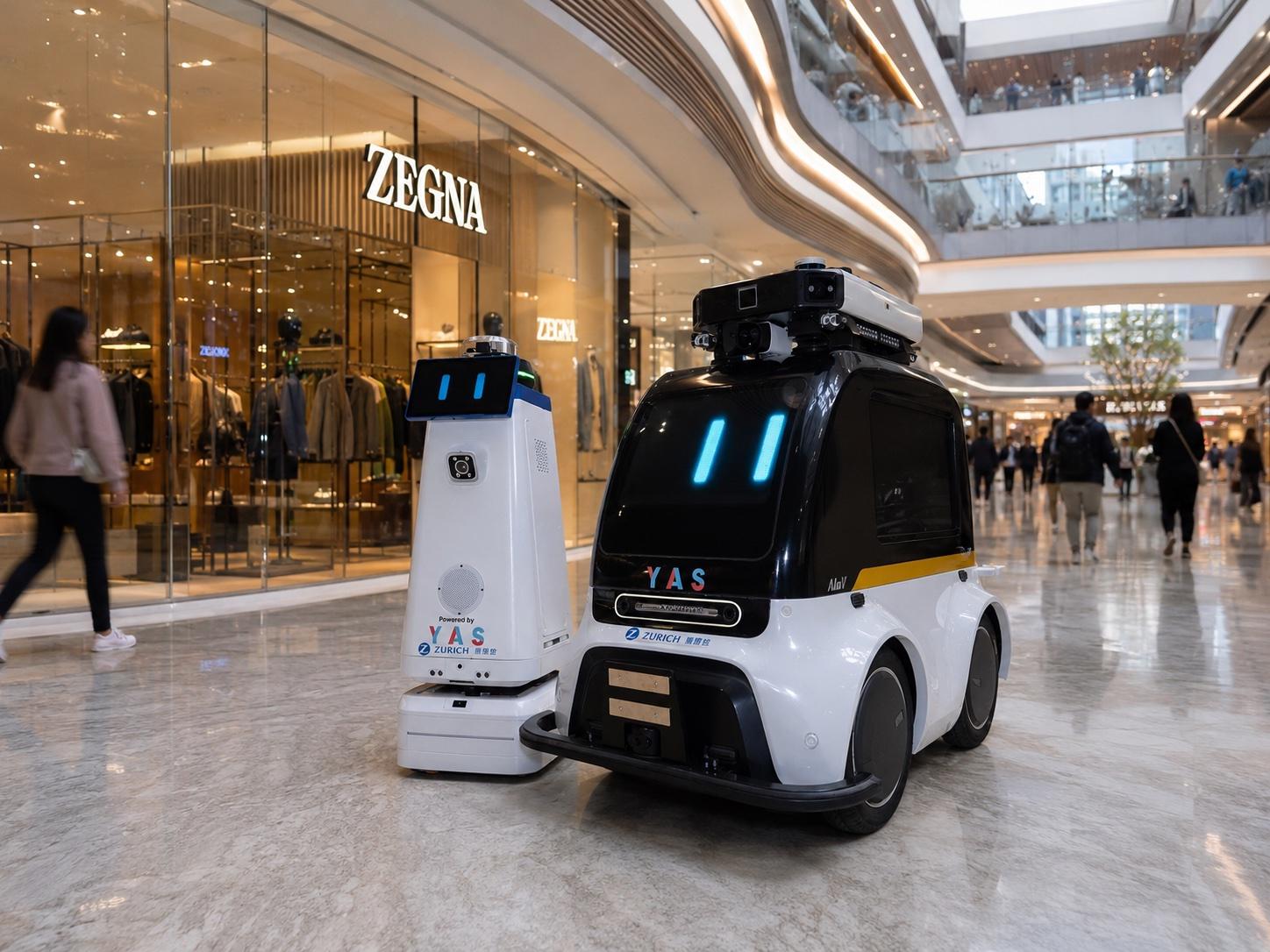
 For robotics operators
A robot's AURA score shows how safely it operates — cutting incidents and loss, and giving new deployments a trusted track record from day one.
Get started
Talk to us about scoring your fleet, robots or autonomous systems — or see where YAS already runs.