
Delivery robots make the curb a data problem
The curb is becoming a contested operating zone for robots, riders, pedestrians, loading bays, and city rules. Better data makes it legible.
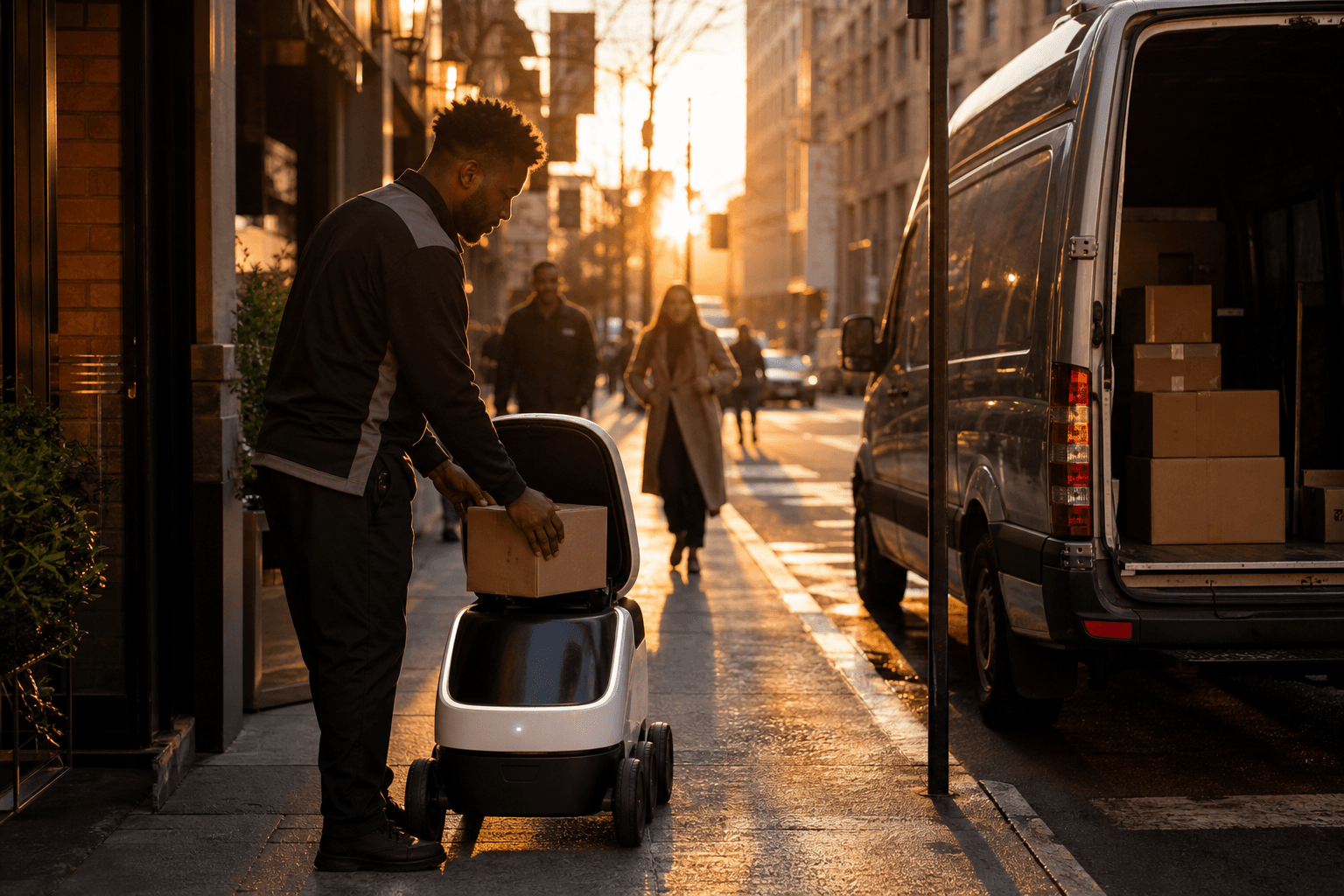
Delivery robotics looks simple when the task is framed as point-to-point movement. In real cities, the hard part is the curb: loading zones, pedestrians, scooters, building access, weather, and temporary restrictions all compete for the same space.
That environment changes minute by minute. A route that works at noon may fail during school pickup or after a road crew changes a crossing. The operating layer needs to capture not just where the robot went, but why the path made sense at that moment.
Good curbside data can help teams separate routine friction from patterns that need a process change. Repeated slowdowns, handoff failures, or blocked access points become signals for redesigning zones, partner instructions, and human support.
The broader lesson applies beyond delivery. As small autonomous systems enter dense spaces, the winning teams will be those that make the operating environment readable before scale turns local exceptions into recurring problems.